
HOSPITALITY INSIGHTS · OPERATIONS UNDER PRESSURE
Part of the Operations Under Pressure series — examining what happens when normal hospitality systems meet real service load, where pressure becomes visible, and tracing those signals back to where they may have begun.
When Every Decision Comes Back to You: Restaurant Management Pressure Points
It’s 8:15 PM.
The restaurant is buzzing.
The kitchen line is firing. The bar is shaking drinks. The floor is turning tables.
And somehow, every thirty seconds, someone is tapping you on the shoulder.
“Can I comp this dessert?”
“Table 14 wants to move to the window. Is that okay?”
“We’re out of the fish. What should I tell them to order instead?”
“Can we pause the delivery app for twenty minutes?”
“Who’s taking Table 8?”
“A guest wants to talk to a manager.”
“Can I swap this shift?”
“Do we take another walk-in?”
None of these questions is a disaster.
Individually, each one takes seconds to clear.
And that is precisely why the pattern is so easy to miss.
One question lands.
Then another.
Then a third.
Before you realise what’s happening, you aren't managing the operation anymore.
You are processing it.
Every tiny uncertainty, every minor exception and every micro-decision is travelling upward through the building until it reaches the exact same terminal:
You.
This is one of the most easily overlooked restaurant management pressure points.
The kitchen looks slammed.
The floor looks scattered.
The bar looks behind.
But this time, the pressure isn't simply moving across the restaurant.
It’s moving upward.
When the Manager Becomes the Queue
We usually think of queues as physical things.
Tickets dangling off the kitchen rail.
Glasses piling up at the service bar.
Hungry guests standing at the front door.
But decisions queue too.
Imagine five team members each hit a tiny bump during service.
One needs permission.
One needs clarification.
One needs an exception.
One isn't sure which task comes first.
One just wants reassurance before stepping forward.
Where do those five uncertainties go?
They march straight to the manager.
Now multiply that across a busy Friday night.
The manager becomes a human traffic light.
Dozens of minor decisions pass through one person before they can move again.
Unlike the kitchen pass, this queue is almost invisible.
You don't see twenty physical decisions stacked on a metal rail.
You experience them as a relentless stream of interruptions.
“Amos?”
“Quick question.”
“Can you just look at this?”
“What do you want to do here?”
Each interruption feels harmless.
Together, they can form a hidden concentration point in the operation.
The Senior Anchor Trap
Why does every decision travel toward one person?
Simple:
Experience.
The senior operator has answers stored in their head.
They know the regulars.
They know which rules can bend.
They know how the head chef reacts when an item gets modified.
They know instantly what to discount and what to charge.
So when uncertainty appears, the team naturally reaches for the safest and often fastest option in the room:
the expert.
That expert becomes the Senior Anchor.
The Senior Anchor can be brilliant at stabilising chaos.
They make decisions in a flash.
But there is a catch.
If routine operational calls constantly require the Senior Anchor, the business can begin organising itself around that person's availability.
When you are on the floor, everything glides along.
The second you step away, friction creeps in.
Questions stack up.
People pause.
Decisions stall.
And eventually, somebody asks:
“Where’s the manager?”
Pay attention to that question.
It may be telling you more than you think.
The Five-Minute Test
Want to see this mechanism in action next Friday?
Try a simple experiment.
Don't look at ticket times.
Don't count tables.
For just five minutes, count how many times a team member interrupts the manager.
Not social conversation.
Only count moments where someone needs the manager's input before they feel able to continue.
Then notice what those interruptions are actually about.
Permission?
Information?
Priority?
An exception?
Reassurance?
Something nobody else feels authorised to decide?
Don't fix anything yet.
Just observe.
Stop asking:
“Why does my team keep bothering me with stupid questions?”
Start asking:
“Why did this decision need to reach my level in the first place?”
The first question blames the person.
The second examines the route.
The Route Is the Real Clue
A busy restaurant needs communication.
A new runner asking for help is normal.
A serious guest complaint may require management.
A safety issue should escalate.
The goal isn't to build a silent restaurant where nobody talks to the boss.
That would be ridiculous.
The signal appears when routine, low-stakes decisions repeatedly climb the ladder.
Watch how this can play out.
A guest asks for a simple sauce substitution.
The server asks the supervisor.
The supervisor asks the manager.
The manager approves it.
Total time: thirty seconds.
No disaster.
Now multiply that by thirty minor decisions during a peak rush.
The interesting part isn't simply the thirty seconds.
It’s the route.
Watch Where Authority Stops
Every business has decision boundaries — whether you've explicitly drawn them or not.
Server A can handle X.
Supervisor B can decide Y.
Manager C approves Z.
Under heavy load, blurry boundaries can become much easier to see.
An employee may know what should be done but isn't sure whether they are authorised to do it.
So they ask.
The supervisor isn't completely sure either.
So the question moves upward.
Eventually, it reaches the person who carries enough authority to make the uncertainty disappear:
the Senior Anchor.
Adding another policy to the staff handbook doesn't automatically solve that.
If the underlying question is:
“Am I allowed to make this call?”
another page of instructions may simply give the employee another thing to interpret.
So observe:
Where does authority actually stop?
Beware of Nod Dependency
Sometimes, the employee already appears to know the answer.
They walk up to you anyway.
They explain the situation.
You nod.
They walk away and execute exactly what they had been planning.
Five seconds.
Easy.
Until it happens twenty times a night.
This is what I call Nod Dependency.
The team member may not be missing information at all.
They may be looking for confirmation or cover before acting.
One nod costs almost nothing.
Fifty nods are worth examining.
Because they may suggest that part of the operation's confidence or decision authority is concentrated around one person.
Your Speed Is Hiding the Crime Scene
Experienced operators are difficult subjects when diagnosing their own businesses.
Why?
Because we're fast.
Someone asks a question?
You answer in two seconds.
Someone brings a problem?
You solve it on the spot.
Because you handle it instantly, the interruption feels free.
It isn't free.
What were you doing immediately before that two-second interruption?
Checking labour costs?
Reading the pass?
Talking with a first-time guest?
Coaching a new hire?
Trying to understand why Table 8 is waiting?
Every interruption breaks your attention.
Before you've completely returned to the first task, another tap on the shoulder arrives.
The restaurant keeps moving because you keep absorbing the interruptions.
You become a human shock absorber.
From the outside, it can look like masterclass management.
And sometimes it is.
But there is another possibility worth examining:
You may be compensating for friction that would otherwise become visible.
Your Business Needs Systemic Shock Absorbers
A car's shock absorber doesn't make the road smooth.
It prevents every bump in the road from travelling directly through the vehicle.
Restaurant operations need something similar.
Routine uncertainties shouldn't necessarily travel all the way to the top.
Low-level decisions need somewhere appropriate to stop.
Common questions need information that travels with the work.
Authority needs understandable boundaries.
Otherwise, every operational bump can travel straight upward:
Server → Supervisor → Manager → Owner
And the more talented the owner is, the easier the pattern can be to hide.
Because the owner keeps saving the day.
Until they take a night off.
The 15-Minute Absence Test
Step off the restaurant floor for fifteen minutes during peak service.
What happens?
Does the operation continue?
Or does a slow-motion queue begin forming around your absence?
“Wait until Amos gets back.”
“Ask the boss when he comes out of the office.”
“I'm not making that call without approval.”
That doesn't automatically mean your team is lazy.
It doesn't mean they're incompetent.
But it is evidence worth examining.
Because part of the operation's ability to move may be sitting inside a particular person's experience, confidence or authority rather than inside the operating structure itself.
Busy ≠ Necessary
It’s easy to fool yourself after a brutal shift.
You finish Friday night exhausted.
You made 80 calls.
Solved 20 crises.
Handled two angry tables.
Helped the kitchen.
Saved the bar.
You feel indispensable.
It's worth examining that feeling.
Some of those decisions genuinely required your expertise.
But how many were simply operational traffic?
The test isn't:
“Was I busy tonight?”
You already know the answer.
The better question is:
“Which of tonight's decisions actually required my level of authority?”
That question begins separating leadership from routine decision traffic.
Follow the Decision, Not the Person
When an interruption keeps recurring, track its journey.
When a question reaches you, don't immediately ask:
“Why doesn't this employee know this by now?”
Trace the route backwards.
Where was this decision born?
Who encountered it first?
What information did they have at that moment?
What made them hesitate?
Why couldn't the supervisor resolve it?
Why did it eventually reach me?
Now you aren't judging staff performance.
You're tracing the decision highway.
You might discover information is missing.
Authority might be unclear.
Or the team may simply have learned that asking you is faster than using the intended process.
You don't know yet.
That's the point.
Measure first. Diagnose second.
The Danger of the Bypass
Watch for another pattern.
A clear operational process exists on paper.
But when pressure rises, people don't use it.
Instead, they bypass it and go directly to the boss.
Why?
Perhaps the official process is too slow.
Perhaps it's confusing.
Perhaps nobody trusts it.
Perhaps authority inside it isn't clear.
Or perhaps experience has simply taught the team that:
“Just ask the boss. It takes two seconds.”
Don't assume the reason.
Observe the route.
Peak service has a habit of revealing which routes people actually trust.
If those routes repeatedly lead directly to you, that pattern deserves investigation.
Before You Hire Another Manager...
When management overload hits, the obvious reaction is:
“We need another supervisor.”
Maybe you do.
Growth is real.
Capacity is real.
But if you add another management layer without understanding why decisions are travelling upward, you may simply add another tollbooth to the same highway:
Server → Supervisor → Manager → Senior Manager → Owner
More payroll.
Potentially the same decision route.
Before adding headcount, look at the decision traffic already moving through the team you have.
A Simple Decision-Traffic Audit
On your next busy shift, grab an index card.
Every time a routine operational question reaches you, record four things:
- What was the question?
Write the raw fact.
Not your interpretation.
- Where did it come from?
Floor?
Bar?
Kitchen?
Guest?
Delivery?
- Why did it need you?
Information?
Permission?
Priority?
Exception?
Reassurance?
If you don't know yet, don't guess.
- Could work continue without your answer?
Yes or no.
At the end of the shift, look at the pattern.
Don't ask:
“Who asked me the most questions?”
Ask:
“What types of decisions kept travelling back to me?”
That is where your restaurant management pressure points may start becoming visible.
Separate Leadership From Traffic
The goal isn't to lock yourself in an office.
The goal isn't to delegate blindly.
And it certainly isn't to let staff operate without standards or appropriate authority.
The goal is to separate genuine management decisions from routine operational traffic.
If every road leads back to you, you haven't just become busy.
You may have become part of the operating mechanism.
Your presence becomes operational capacity.
Your attention becomes infrastructure.
Your absence creates friction.
That's a pattern worth seeing.
Frequently Asked Questions
What are restaurant management pressure points?
Restaurant management pressure points are places where decisions, approvals, questions or responsibility repeatedly concentrate around management.
They can become visible when routine operational choices repeatedly travel upward during peak service rather than stopping at an earlier level.
The pattern is a signal to investigate — not a diagnosis by itself.
How do I know if I've become a management bottleneck?
Start by observing what reaches you during peak service.
If you are repeatedly interrupted for minor approvals, substitutions, priorities or routine decisions, record those interruptions and examine the pattern.
The important question isn't simply how many questions reach you.
It's which decisions repeatedly require your involvement and why.
What is the Senior Anchor?
The Senior Anchor is the experienced person an operation repeatedly turns to when uncertainty appears.
Their experience can stabilise service quickly.
But when routine decisions depend heavily on their presence, it is worth examining what happens when that person steps away.
What is Nod Dependency?
Nod Dependency describes a pattern where someone appears to know what they want to do but still seeks confirmation from a senior person before proceeding.
It may involve authority, confidence, previous experience or other factors.
The repeated pattern is what makes it worth investigating.
Does management overload mean I need another manager?
Not necessarily.
Additional management capacity may be appropriate.
But adding another manager without first understanding why decisions are travelling upward can simply add another stop to the escalation route.
Observe the decision traffic before assuming additional headcount is the answer.
What should I track during peak service?
Track the origin, type and necessity of routine interruptions reaching management during a defined peak window.
Record where the question originated, what kind of decision it involved and whether work could continue without your answer.
Then look for recurrence.
You're making the decision traffic visible before deciding what it means.
[SEE WHERE EVERYTHING KEEPS ROUTING BACK TO YOU →
](https://transmissionvault.b-cdn.net/Sales/sales-hero-4-executive-reset.html)
The question from the floor.
The approval from the bar.
The clarification from the kitchen line.
The minor exception for a guest.
One interruption is normal.
But when your business repeatedly relies on you to absorb routine micro-decisions, something deeper may be happening.
You haven't just become busy.
You may have become part of the operating mechanism.
Executive Drift Reset™ is designed to help make that pattern visible — where interruptions reach you, where decisions keep travelling upward and where authority appears to stop.
It doesn't manage your floor for you.
It doesn't decide what you should delegate.
It gives you a structured way to examine the decision traffic before you decide what to change.
If you are the system, you cannot build the system.
EXECUTIVE DRIFT RESET™ — €179
SEE WHERE EVERYTHING KEEPS ROUTING BACK TO YOU →
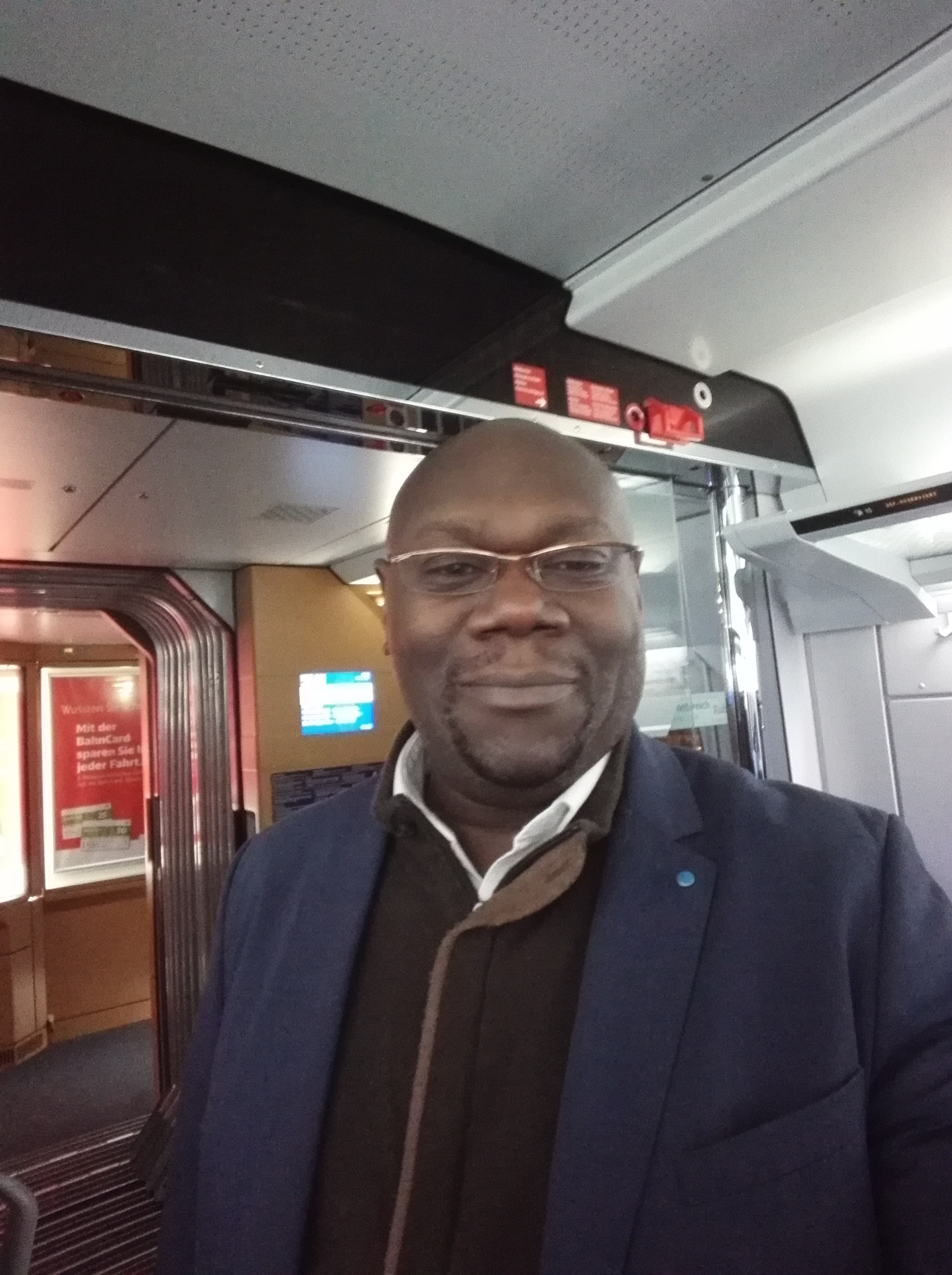
Article by
Amos J. Amolo
Amos Jactone Amolo is the founder of 6th Sense Hospitality and an Operations System Designer with more than 30 years of experience across food & beverage, live events, catering and venue operations. He still actively owns and operates hospitality and event businesses, so his observations are not based on what the industry used to look like. They are being tested on the floor today.
His perspective was built — and continues to be tested — in live operating environments where decisions happen in real time. He watches what changes when an operation comes under pressure: where timing slips, information stops moving, responsibility becomes unclear and people begin compensating for a system that is no longer helping them.
Just as importantly, he watches the customer. Changing drinking habits, new expectations around food, shorter attention spans and the increasingly visual way guests make buying decisions are already changing how hospitality needs to operate.
That thinking forms the foundation of 6th Sense Hospitality: look beyond the obvious symptom and find where people, process, technology, money and decision-making have stopped working together.
His core philosophy is simple:
“If your team starts to guess, the money has already left the building.”
Through 6th Sense Hospitality, Amos develops practical diagnostics and operational systems that help operators see what is actually happening inside their businesses — before workarounds become accepted as normal.
Not theory. Still operating. Still observing. Still testing what actually works.
Disclaimer
The content published by 6th Sense Hospitality is provided for informational and educational purposes and reflects practical hospitality experience and operational analysis. It is not intended as legal, financial, tax, HR, or other professional advice. Business circumstances vary, and readers should seek appropriate professional advice where necessary.


