
A restaurant bottleneck is easy to see.
Orders pile up.
Guests wait.
The pass fills.
Servers start asking where their food is.
Someone calls for another pair of hands.
The manager jumps in.
Everybody moves faster.
And naturally, everybody looks at the place where the queue has formed.
That's not necessarily where the problem is.
After more than 30 years inside hospitality operations, this is one of the things I have learned to distrust:
The place where pressure becomes visible is not always the place where pressure was created.
That's why restaurant management bottleneck analysis shouldn't begin with:
Who is too slow?
It should begin with:
What is preventing the operation from moving?
Those are two completely different questions.
Think About a Motorway
Imagine traffic has stopped.
You are sitting in a queue with hundreds of cars.
From where you're sitting, the problem appears obvious.
There are too many cars.
But five kilometres ahead, perhaps two lanes have become one.
That's the constraint.
Adding another car behind you doesn't solve it.
Telling everybody to drive faster doesn't solve it.
And blaming the driver directly in front of you certainly doesn't solve it.
You have to find the point where flow changed.
Restaurants behave in much the same way.
The queue may be visible at the pass.
But the bottleneck might have started at order entry.
Or preparation.
Or storage.
Or menu design.
Or one piece of equipment.
Or the way information travels.
Or the fact that one person has to approve everything.
Don't analyse where the queue ends. Trace where the flow changed.
A Bottleneck Doesn't Have to Look Broken
This is important.
When people hear “bottleneck,” they often imagine something obviously failing.
A slow grill.
A broken printer.
A bartender who can't keep up.
A POS terminal taking too long.
Those can certainly become bottlenecks.
But some of the most expensive constraints look completely normal.
Imagine four cooks can each produce their part of an order quickly.
Excellent.
But every completed plate has to pass through one person before it leaves the kitchen.
If that person can only clear orders at a certain rate, adding another cook may achieve almost nothing.
You've increased capacity before the constraint.
The bottleneck hasn't moved.
You've simply created a bigger queue in front of it.
This is why adding staff to a struggling restaurant can sometimes make the operation feel even more chaotic.
More bodies.
More movement.
More communication.
Same constraint.
Watch Where Things Wait
If you want to begin a restaurant management bottleneck analysis without buying anything, watch where things wait.
Not only people.
Orders.
Ingredients.
Plates.
Information.
Decisions.
Payments.
A ticket waiting to be acknowledged.
Food waiting under a heat lamp.
A server waiting for a dish.
A cook waiting for an ingredient.
A bartender waiting for glassware.
An employee waiting for a manager's approval.
A guest waiting to pay.
Every waiting point tells you something.
It doesn't automatically mean you've found the bottleneck.
But it gives you somewhere to investigate.
Because flow stops when something cannot continue to the next stage.
Follow One Order
Here's another simple exercise.
During a busy period, choose one order.
Follow it.
Not emotionally.
Mechanically.
When was it entered?
When did the kitchen receive it?
When was preparation started?
Which station touched it first?
Where did it wait?
Who had to make a decision?
Did anybody have to leave their station?
Were all components ready at roughly the same time?
How long did the completed plate wait before collection?
When did it reach the guest?
You may be surprised.
A table waiting 25 minutes for food doesn't necessarily mean the kitchen spent 25 minutes cooking it.
Perhaps the order waited four minutes before production started.
Perhaps one component waited for another.
Perhaps the plate sat at the pass.
Perhaps the server didn't know it was ready.
Perhaps a modifier required somebody to stop and ask a question.
Total waiting time and production time are not the same thing.
That distinction alone can completely change where you look for the problem.
The Screaming Printer Isn't Always the Problem
This is one of my favourite operational traps.
The printer starts screaming.
Tickets keep coming.
The rail fills.
Everybody looks at the printer.
But the printer may be doing its job perfectly.
It is telling you that demand is arriving faster than the operation can currently process it.
The question isn't:
How do we make the printer stop?
The question is:
What changed between order entry and production capacity?
Maybe too many complex orders entered simultaneously.
Maybe one station is overloaded while another has spare capacity.
Maybe menu modifiers are creating decision friction.
Maybe preparation wasn't matched to demand.
Maybe the physical layout forces unnecessary movement.
Maybe one piece of equipment has become the true capacity limit.
The screaming printer is a signal.
Don't confuse the signal with the cause.
Bottlenecks Move
This is where restaurant bottleneck analysis becomes more interesting.
You find one constraint.
You fix it.
Finished?
Not necessarily.
You may simply reveal the next one.
Imagine the grill is limiting production.
You increase grill capacity.
Now food leaves the grill faster.
Wonderful.
Except the pass can no longer clear plates quickly enough.
The bottleneck moved.
You reorganise the pass.
Now plates leave faster.
But servers can't collect them quickly enough because the service station is badly positioned.
The bottleneck moved again.
This isn't failure.
It is how systems behave.
When you remove one constraint, the next constraint becomes visible.
That's why I don't believe in the idea that one restaurant management bottleneck analysis permanently “fixes” an operation.
The operation changes.
Volume changes.
Menus change.
Staff change.
Customer behaviour changes.
Technology changes.
The constraint can change with them.
Watch Their Feet
I use this exercise often because it requires no software.
During peak service, stop looking at people's faces.
Watch their feet.
Where do they walk?
Where do they cross?
What do they repeatedly fetch?
Where do they turn around?
Who keeps leaving their station?
Where do two workflows physically collide?
A member of staff walking ten metres for something doesn't look like a restaurant bottleneck.
But if that movement happens repeatedly across hundreds of transactions, you've introduced distance into the production process.
And distance consumes time.
Sometimes restaurant kitchen efficiency improves not because anybody works faster, but because something gets moved two metres.
That's the kind of solution I like.
No motivational speech.
No training programme.
No new software.
Move the thing.
More Staff Can Make a Bottleneck Worse
This is another uncomfortable one.
Service is struggling.
The instinct is:
We need another person.
Sometimes you absolutely do.
But first ask where that person will work.
If the station itself can only physically accommodate two people, adding a third may reduce output.
Now people are crossing each other.
Reaching around each other.
Waiting for equipment.
Repeating communication.
The labour cost goes up while restaurant throughput stays roughly where it was.
The spreadsheet says:
More labour.
The floor says:
Same capacity.
That is why restaurant labour costs and restaurant efficiency have to be considered together.
Headcount is not capacity.
Flow determines usable capacity.
The Senior Anchor Can Become the Bottleneck
Machines and stations aren't the only constraints.
People can become bottlenecks without being poor performers.
In fact, sometimes the strongest employee becomes the constraint.
Everybody asks Maria.
Maria knows where everything is.
Maria fixes the till.
Maria handles complaints.
Maria knows the supplier.
Maria approves the void.
Maria knows which table moved.
Maria knows how the system works.
Excellent employee.
Dangerous architecture.
Because information and decisions are now travelling through one person.
As volume increases, Maria receives more questions.
More decisions.
More interruptions.
Eventually the operation can only move as quickly as Maria can respond.
I've described this elsewhere as the Senior Anchor Trap.
The employee isn't the problem.
The dependency is.
And adding another junior employee doesn't remove that bottleneck if everybody still has to ask Maria.
The Statue Effect: When the Bottleneck Is Information
There is another moment I watch very carefully.
Someone stops.
Not because they are lazy.
Not because there is nothing to do.
They don't know what the next correct action is.
So they look around.
They ask.
They wait.
Under pressure, that pause spreads.
I've called this the Statue Effect.
And it shows why restaurant bottlenecks aren't always physical.
Information itself can become the constraint.
If five people are capable of acting but all five require one answer before continuing, the bottleneck isn't labour.
It's decision flow.
That is why one of my core principles remains:
“If your team starts to guess, the money has already left the building.”
Guessing means the operation has reached a point where the system is no longer providing enough clarity for the conditions it is facing.
Don't Measure Everything
Restaurant operators now have access to more data than ever.
Ticket timestamps.
POS data.
Labour reports.
Kitchen display data.
Sales by fifteen-minute interval.
Stock systems.
Scheduling platforms.
Useful.
But more data doesn't automatically produce more understanding.
You can measure 50 things and still miss the constraint.
I prefer starting with the operational question.
Where does flow stop, slow down or become dependent on intervention?
Then decide what information would help you understand why.
Sometimes you need timestamps.
Sometimes you need transaction data.
And sometimes you simply need to stand in the correct place for ten minutes and watch what happens.
The tool should follow the question.
Not the other way around.
SIGNAL → MOMENT → RESPONSE LOCK → REVIEW
This is where bottleneck analysis connects with a wider way I look at operations.
SIGNAL
Something moves outside its normal condition.
Ticket times rise.
A queue forms.
A station starts asking for help.
Orders begin waiting.
MOMENT
Pressure arrives.
The constraint starts affecting the rest of the operation.
People compensate.
Movement increases.
Workarounds appear.
Someone begins rescuing the system.
RESPONSE LOCK
For known recurring situations, the operation already knows what happens next.
Not every response can or should be predetermined.
But predictable pressure points can have predefined actions.
If a particular station crosses an agreed operating threshold, perhaps production is temporarily redistributed.
Perhaps modifiers are restricted.
Perhaps one person moves exclusively to the pass.
The exact response depends on the operation.
The important part is that the first response isn't invented while the queue is growing.
REVIEW
After service, investigate.
Where did the queue actually begin?
What was waiting?
What caused it?
Did the response reduce the load?
Did the bottleneck move somewhere else?
What needs redesigning before the next peak?
Signal → Moment → Response Lock → Review.
Now the restaurant isn't simply surviving busy periods.
It is learning from them.
A Bottleneck Is Expensive Because Everything Behind It Has to Wait
This is where restaurant throughput and margin finally meet.
A bottleneck doesn't only slow one station.
It affects everything depending on that station.
The kitchen waits.
The server waits.
The table waits.
The next seating waits.
Sometimes the guest leaves.
Sometimes staff compensate by moving faster.
Sometimes mistakes increase.
Sometimes management adds labour.
Sometimes complimentary items are used to repair the guest experience.
One constraint can create costs in completely different parts of the business.
That's why the most visible expense isn't necessarily where the original problem lives.
And it's why blindly reducing restaurant operating costs can make a bottleneck worse.
Cut the wrong person and the constraint tightens.
Remove the wrong preparation step and another station slows.
Buy cheaper equipment with lower capacity and you've installed tomorrow's bottleneck yourself.
Stop Asking Who Is Slow
When service struggles, this is one of the most useful changes in language I know.
Instead of:
Who is slow?
Ask:
Where is flow slowing?
Instead of:
Who made the mistake?
Ask:
Where did the process allow the mistake to happen?
Instead of:
Do we need more staff?
Ask:
What is currently limiting capacity?
Instead of:
Why can't they cope?
Ask:
What changes when the operation comes under load?
Those questions don't excuse poor performance.
They simply stop us from diagnosing a system problem as a personality problem.
And that matters.
Because you can replace the person and leave the bottleneck exactly where it was.
The Queue Is Evidence. Not the Diagnosis.
When tickets are stacked across the rail, it is tempting to believe you've found the problem.
You haven't.
You've found evidence.
The real work is tracing backwards.
Where did flow first change?
What started waiting?
What became overloaded?
Where did information stop moving?
Where did one person become indispensable?
Where did normal procedure turn into a workaround?
That's restaurant management bottleneck analysis.
Not staring harder at the queue.
Following it back to where it began.
Because good operations don't come from making everybody move faster.
They come from removing what prevents them from moving.
You Can See the Queue. Can You See What Created It?
If parts of this article felt familiar, don't immediately add another employee, buy another platform or tell the kitchen to move faster.
First locate the constraint.
The place where the pressure becomes visible may only be the end of the chain.
The useful question is:
Where did the flow actually begin to change?
Look at the handoffs.
Look at the waiting.
Look at the repeated questions.
Look at the unnecessary movement.
Look at the person everybody depends on.
Look at what changes when volume arrives.
Then diagnose before you intervene.
Don't Guess at the Bottleneck. Find It.
Use the relevant 6th Sense Hospitality operational diagnostic to look beyond the visible symptom and identify where friction may be limiting flow inside your operation.
See the signal. Trace the constraint. Fix what is actually holding the operation back.
→ Run the Diagnostic
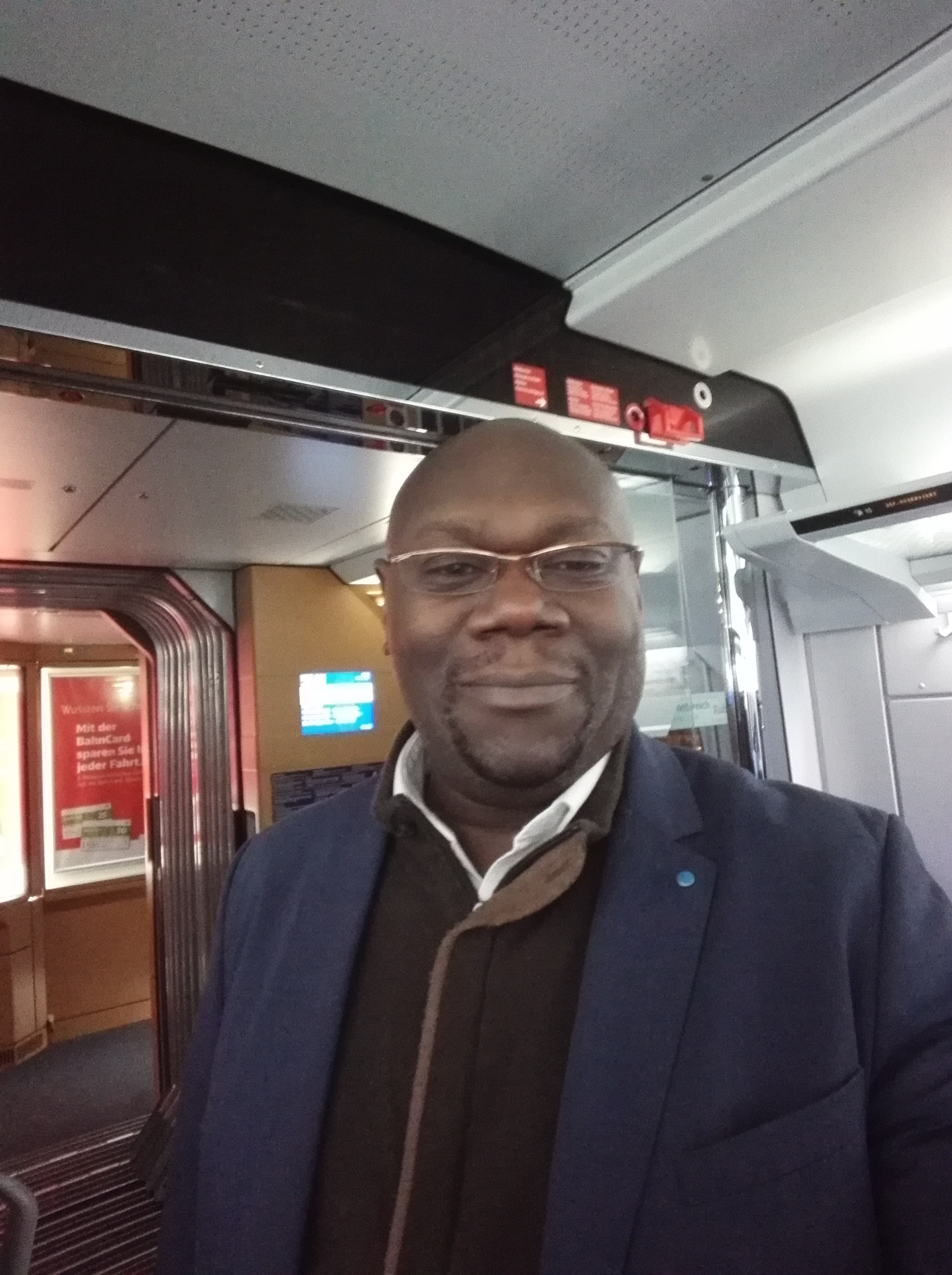
Article by
Amos J. Amolo
Amos Jactone Amolo is the founder of 6th Sense Hospitality and an Operations System Designer with more than 30 years of experience across food & beverage, live events, catering and venue operations. He still actively owns and operates hospitality and event businesses, so his observations are not based on what the industry used to look like. They are being tested on the floor today.
His perspective was built — and continues to be tested — in live operating environments where decisions happen in real time. He watches what changes when an operation comes under pressure: where timing slips, information stops moving, responsibility becomes unclear and people begin compensating for a system that is no longer helping them.
Just as importantly, he watches the customer. Changing drinking habits, new expectations around food, shorter attention spans and the increasingly visual way guests make buying decisions are already changing how hospitality needs to operate.
That thinking forms the foundation of 6th Sense Hospitality: look beyond the obvious symptom and find where people, process, technology, money and decision-making have stopped working together.
His core philosophy is simple:
“If your team starts to guess, the money has already left the building.”
Through 6th Sense Hospitality, Amos develops practical diagnostics and operational systems that help operators see what is actually happening inside their businesses — before workarounds become accepted as normal.
Not theory. Still operating. Still observing. Still testing what actually works.
Disclaimer
The content published by 6th Sense Hospitality is provided for informational and educational purposes and reflects practical hospitality experience and operational analysis. It is not intended as legal, financial, tax, HR, or other professional advice. Business circumstances vary, and readers should seek appropriate professional advice where necessary.


![A busy quick service restaurant team working under pressure during a peak service, with staff moving between stations, orders backing up and the owner or manager overseeing the operation.]](https://getautoseo.com/storage/hero_images/48.jpg?v=e5395c28c3f5)