
HOSPITALITY INSIGHTS · OPERATIONS & FLOW
Inside the moments when a busy restaurant looks fully operational, but guest attention quietly disappears. This article examines how competing demands during peak service can turn reasonable staff actions into delays, missed sales and negative guest experiences.
Quick Answer
Front-of-house operational friction is the hidden drag on service that occurs when competing tasks, unclear decision boundaries or micro-interruptions consume staff attention faster than it can be restored.
Unlike obvious mistakes or slow staff performance, this friction can emerge when everyone is working hard but the operation reaches an attention bottleneck. Guest requests stall, service momentum breaks and opportunities for additional revenue quietly disappear.
The 1-Star Signal: Reading Between the Lines of a Google Review
You open your Google Business Profile on Saturday morning.
And there it is.
⭐☆☆☆☆ — "Food was good, but we were completely ignored."
"We came in at 7:30 PM on Friday. The food was great when it finally arrived, but after we got our mains, our server completely disappeared. We wanted a second glass of wine, but we couldn't catch anyone's eye for 15 minutes. We ended up skipping dessert and just wanting to leave, but even getting the bill took forever. The place was packed, but it felt like nobody was looking at our section."
Your first reaction as an operator?
You call a team huddle.
You ask who was running Section 2.
You remind the floor staff to "keep their heads up" and "look at their tables."
Except the review didn't tell you the whole story.
What the guest saw was a server who ignored them.
What actually happened was a server carrying three blazing-hot plates to Table 9, who got flagged down for cutlery on the return journey, stopped at the POS by a junior colleague asking about a nut allergy, and then got trapped at the dispense bar waiting for an override code.
Nobody made an obvious mistake.
Nobody sat down for a break.
Every single action the server took was completely reasonable.
So why did the guest leave feeling invisible?
Welcome to the Friction of Competing Demands.
The Signal: Attention Is Being Consumed Faster Than It Can Be Restored
When a Google review hits you like that, your knee-jerk instinct as an operator is to search for a personal failure:
- "Who forgot the wine order?"
- "Why isn't the floor team moving faster?"
- "Do we need another server on this section?"
So you run a standard front-of-house operational review.
You watch step counts. You rate staff speed.
And your team passes with flying colours. They're practically sprinting.
Why?
Because traditional reviews can focus on broken rules rather than attention consumed by competing demands.
What killed that second glass of wine wasn't a lack of effort, a broken printer or a missing tablet.
It was attention capacity.
Think of your servers like jugglers carrying hot coals.
Every time a guest asks a question, a colleague needs an answer or a task gets interrupted mid-stride, another demand lands in their hands.
They don't necessarily stop because they don't care.
They can reach a point where they have more unfinished demands than they can manage at once.
Human attention has limits.
When legitimate tasks accumulate faster than they can be completed, visible activity can mask declining guest care.
Your staff are working flat out.
Yet your guests leave negative Google reviews.
That isn't a staff performance issue. That is front-of-house operational friction in its purest, most dangerous form.
The Guest Sees the Outcome. The Operator Must Examine the Conditions.
The guest doesn't see the allergy question.
They don't see the manager approval holding up the dispense bar.
They don't know the server has been interrupted four times between the kitchen and their table.
They see one thing:
Nobody came back.
And from the guest's perspective, that's a perfectly legitimate complaint.
But the operator has access to another side of the story.
The question isn't whether the guest was disappointed. They were.
The question is what happened inside the operation that produced that experience.
The Hidden Cost: The Wine That Was Never Ordered
Return to the review.
The guest wanted a second glass of wine.
Then dessert.
Neither purchase happened.
The restaurant didn't necessarily lose the entire table's revenue. The guests still paid for their meal.
But it may have lost two additional sales because nobody was available to recognise the buying opportunity.
Now consider what happens if similar moments occur repeatedly across several tables during peak service.
A guest waits for another drink.
Another abandons dessert.
A third wants coffee but decides it's easier to ask for the bill.
None of these missed purchases necessarily appears as an error in the POS.
There is no voided transaction.
No refund.
No obvious shortage.
The sale never entered the system.
And that makes it especially easy to overlook.
The Google review is visible.
The second glass of wine that was never ordered is not.
This is where guest behaviour and operational friction meet: a guest may still be willing to spend, but the operation has lost the attention needed to capture that demand.
*** The Loud Fallacy: Why Buying More Tech Won't Fix Your Reviews***
When operators see negative service reviews, their immediate reaction is often to throw technology at the problem.
"Let's get handheld ordering tablets!"
"Let's add another POS terminal!"
Technology can be brilliant when it removes friction.
But it becomes an expensive distraction when it simply relocates the bottleneck.
Take handheld ordering tablets.
They save your team from walking back to a central terminal.
Great.
But if modifying a simple drink order requires navigating four confusing submenus while standing at the table, you've traded walking time for screen time.
The technology performs its assigned function.
But has the operational outcome improved?
Now consider adding another POS terminal.
Three servers can enter fifteen orders almost simultaneously.
That might reduce the queue at the till.
But what happens if the dispense bar cannot prepare those drinks at the same rate?
The queue vanishes from the POS.
It reappears at the bar.
And your server is still standing there waiting for a glass of Malbec while another guest wonders why nobody is looking at their table.
You didn't remove the friction. You just digitised the chaos and handed it to your bartender.
This is why technology must have a defined job.
Before you add another screen, ask:
Did this tool remove friction—or did it just give it a new place to hide?
The Action: Run a 10-Minute Attention Trace This Weekend
Stop telling your team to "keep their heads up."
Stop assuming that faster movement automatically means better service.
During your next busy shift, choose one server and observe their attention for ten minutes.
Not to evaluate their personality.
Not to catch mistakes.
And certainly not to decide who deserves blame.
You're examining what happens to the work when legitimate demands compete for the same person's attention.
1***. Count the Micro-Interruptions***
How many times is the server interrupted while carrying out an existing task?
A colleague needs an answer.
A guest requests cutlery.
The kitchen asks for clarification.
A manager approval is required.
Record what interrupted the original task and whether it was resumed.
2. Watch the Drop Point
Where does a request stop receiving attention?
Perhaps a guest asks for another drink while the server is collecting plates.
The request is acknowledged.
But before the server can act, another demand takes priority.
The original request hasn't necessarily been forgotten.
It has been displaced.
At what point does an acknowledged guest request become unfinished work?
3. Trace the Unfinished Tasks
Watch what accumulates behind the server.
A drink order waiting to be entered.
A bill waiting to be printed.
A table waiting for attention.
A colleague waiting for an answer.
These tasks may all be legitimate.
The issue is whether the operation can absorb them without repeatedly displacing earlier requests.
4. Compare What Happens
One interruption doesn't establish a recurring problem.
Observe whether similar attention losses appear during comparable periods.
Do particular tasks repeatedly interrupt others?
Does attention return to the original request?
Do guest requests remain unfinished longer as service becomes busier?
You're looking for a pattern, not trying to confirm a conclusion you've already made.
5. Identify What Needs Further Examination
After the observation, ask:
What is consuming attention, where is it happening, and what remains unfinished as a result?
The trace may reveal competing priorities, repeated approvals, poorly timed interruptions or another condition entirely.
The purpose is to make the pressure visible before deciding what to change.
The Question Worth Asking
That one-star Google review was written by someone who wanted another glass of wine.
The guest wasn't interested in your POS system.
They weren't interested in how many steps the server walked.
They didn't know how many questions the manager answered that evening.
They wanted someone to notice them.
And that brings us back to the central question.
When everyone is doing their job, why does the guest still end up waiting?
The answer may be hidden in the demands competing for attention during the busiest moments of service.
You won't necessarily find it by asking people to work harder.
You have to examine what their attention is being asked to carry.
Because a full dining room can conceal an operation that is quietly losing opportunities to serve—and sell.
If your team starts to guess, the money has already left the building.
6th Sense Hospitality — Still operating. Still observing. Still testing what actually works.
Frequently Asked Questions
What is front-of-house operational friction?
Front-of-house operational friction is the loss of service momentum caused by interruptions, competing demands, unclear decisions or other conditions that prevent guest-facing work from progressing smoothly. It can occur even when employees are working hard and following established procedures.
Can a restaurant receive negative reviews even when its staff are performing well?
Yes. Guests judge the experience they receive, not the amount of effort taking place behind the scenes. A server may be occupied with legitimate tasks while another guest experiences a prolonged wait. Both observations can be true.
How do micro-interruptions affect restaurant service?
Micro-interruptions can displace attention from an unfinished task. When several interruptions occur close together, requests may remain incomplete, be resumed late or require additional effort to recover. The effect depends on the task, timing and operating conditions.
Does front-of-house friction affect restaurant revenue?
It can. When guests cannot attract attention for another drink, dessert or coffee, potential purchases may never take place. These missed opportunities don't necessarily appear as errors or refunds in the POS because the transactions were never initiated.
Will handheld ordering tablets reduce front-of-house friction?
They may reduce certain steps, such as walking to a central POS terminal. But their effect depends on the job they're intended to perform and how they interact with the rest of the operation. Removing one queue can sometimes expose or increase pressure elsewhere.
What is a 10-minute Attention Trace?
An Attention Trace is a short observation exercise that follows one employee's tasks, interruptions and unfinished requests during service. Its purpose is to identify where attention is consumed or displaced, not to judge individual performance or establish a root cause from one observation.
How is a diagnostic scan different from an operational solution?
A diagnostic scan examines a defined condition and helps make relevant observations visible. It does not automatically establish every cause or prescribe a guaranteed solution. The operator must interpret the findings in context and decide what action, if any, is appropriate.
Stop Guessing. Expose Where the Pressure Builds.
A negative review tells you what the guest experienced.
It doesn't automatically explain the conditions that produced that experience.
Your ten-minute observation may reveal a recurring interruption, a decision bottleneck or a concentration of competing tasks.
But recognising the signal is only the beginning.
At 6th Sense Hospitality, the NAVIGATOR Method™ — powered by Signal Mapping provides the thinking behind our structured operational diagnostics.
The **Peak-Hour Pathfinder™ ** is designed for operators who want to examine front-of-house pressure during live service.
It provides a structured starting point for observing where attention, responsibility and service momentum are being interrupted.
It's a diagnostic instrument.
Not a repair kit.
It doesn't make the decision for you.
That's your job.
Locate where the pressure begins—before you spend money fixing where it ends.
**SEE WHAT'S REALLY GOING ON → **
Explore the Peak-Hour Pathfinder™ Floor Scan
Peak-Hour Pathfinder™ | Self-applied operator diagnostic
Article by
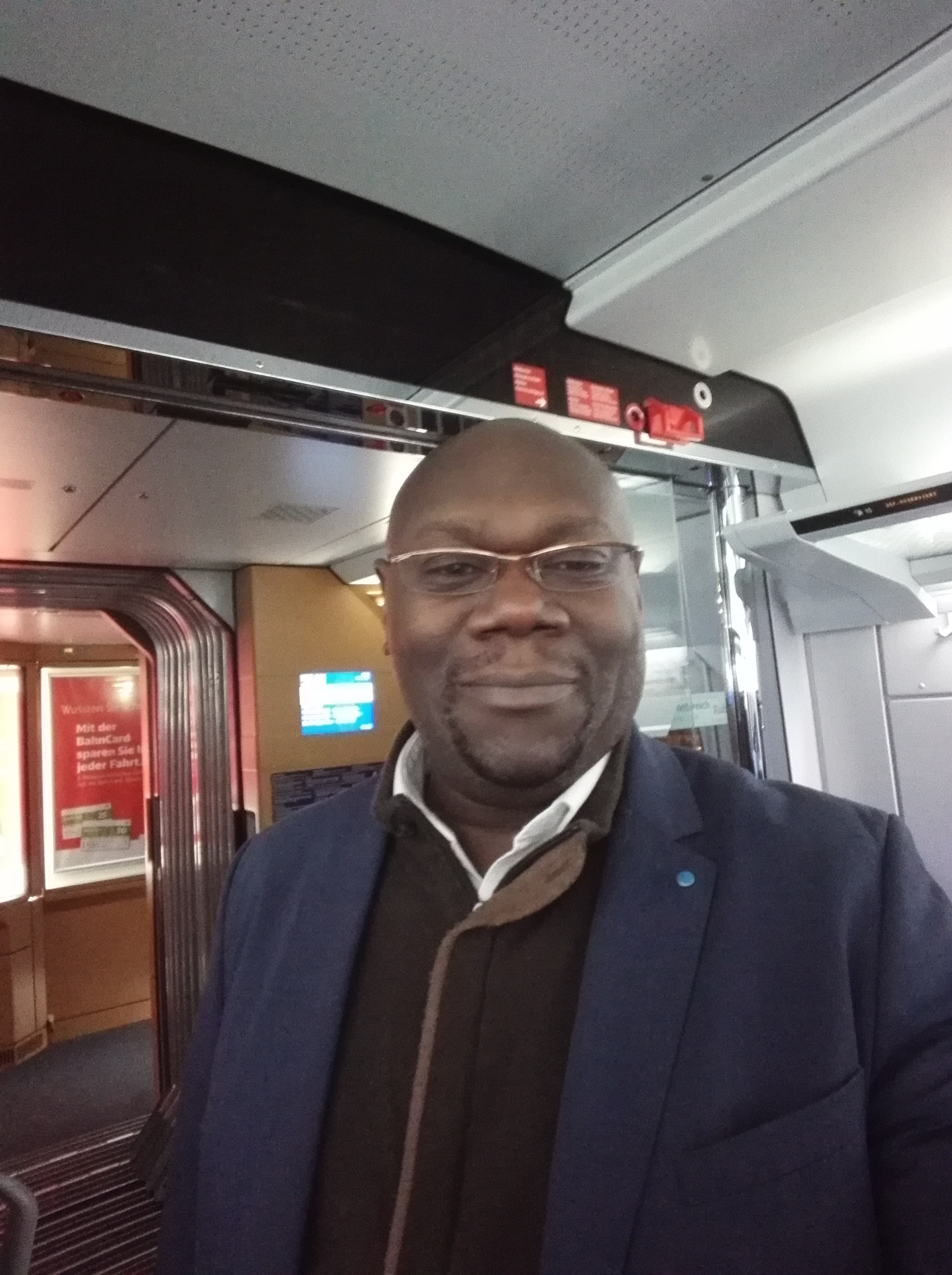
Amos J. Amolo
Amos Jactone Amolo is the founder of 6th Sense Hospitality and an Operations System Designer with more than 30 years of experience across food & beverage, live events, catering and venue operations. He still actively owns and operates hospitality and event businesses, so his observations are not based on what the industry used to look like. They are being tested on the floor today.
His perspective was built — and continues to be tested — in live operating environments where decisions happen in real time. He watches what changes when an operation comes under pressure: where timing slips, information stops moving, responsibility becomes unclear and people begin compensating for a system that is no longer helping them.
Just as importantly, he watches the customer. Changing drinking habits, new expectations around food, shorter attention spans and the increasingly visual way guests make buying decisions are already changing how hospitality needs to operate.
That thinking forms the foundation of 6th Sense Hospitality: look beyond the obvious symptom and find where people, process, technology, money and decision-making have stopped working together.
His core philosophy is simple:
“If your team starts to guess, the money has already left the building.”
Through 6th Sense Hospitality, Amos develops practical diagnostics and operational systems that help operators see what is actually happening inside their businesses — before workarounds become accepted as normal.
Not theory. Still operating. Still observing. Still testing what actually works.
Disclaimer
The content published by 6th Sense Hospitality is provided for informational and educational purposes and reflects practical hospitality experience and operational analysis. It is not intended as legal, financial, tax, HR, or other professional advice. Business circumstances vary, and readers should seek appropriate professional advice where necessary.


